Eleison has a longstanding dedication to providing support, resources, and assistance to survivors of gender-based violence (GBV). With a commitment to continually improving these services, we are thrilled to announce that we are partnering with members of our advisory board, Dr. Tina Jiwatram-Negrón and Dr. Ran Hu, to launch a qualitative research study on crisis intervention services for GBV survivors.
GBV is an epidemic that affects individuals of diverse ages, backgrounds, and gender identities, leaving a trail of physical, emotional, and psychological scars. Despite its widespread prevalence, it remains vastly underreported, with many survivors suffering in silence due to stigma, retaliation, or a lack of support. While strides have been taken to combat this issue, it’s crucial to understand the unique challenges faced by survivors to improve support services and pave the way for a world free of violence and discrimination.
Dr. Jiwatram-Negrón and Dr. Hu bring significant expertise to this research initiative. Dr. Jiwatram-Negrón, an Assistant Professor of Social Work at Arizona State University (ASU) and core faculty in the ASU Office of Gender-Based Violence, focuses on developing community-engaged interventions, both in the U.S. and globally, with a particular emphasis on the intricate connections between GBV and various health and mental health disparities, such as HIV, substance use and misuse, depression, and suicidality. Dr. Hu, a Postdoctoral Research Fellow at the University of British Columbia’s Center for Gender and Sexual Health Equity, is dedicated to addressing social-structural inequalities and root causes of GBV, focusing on promoting equity and safety for all.
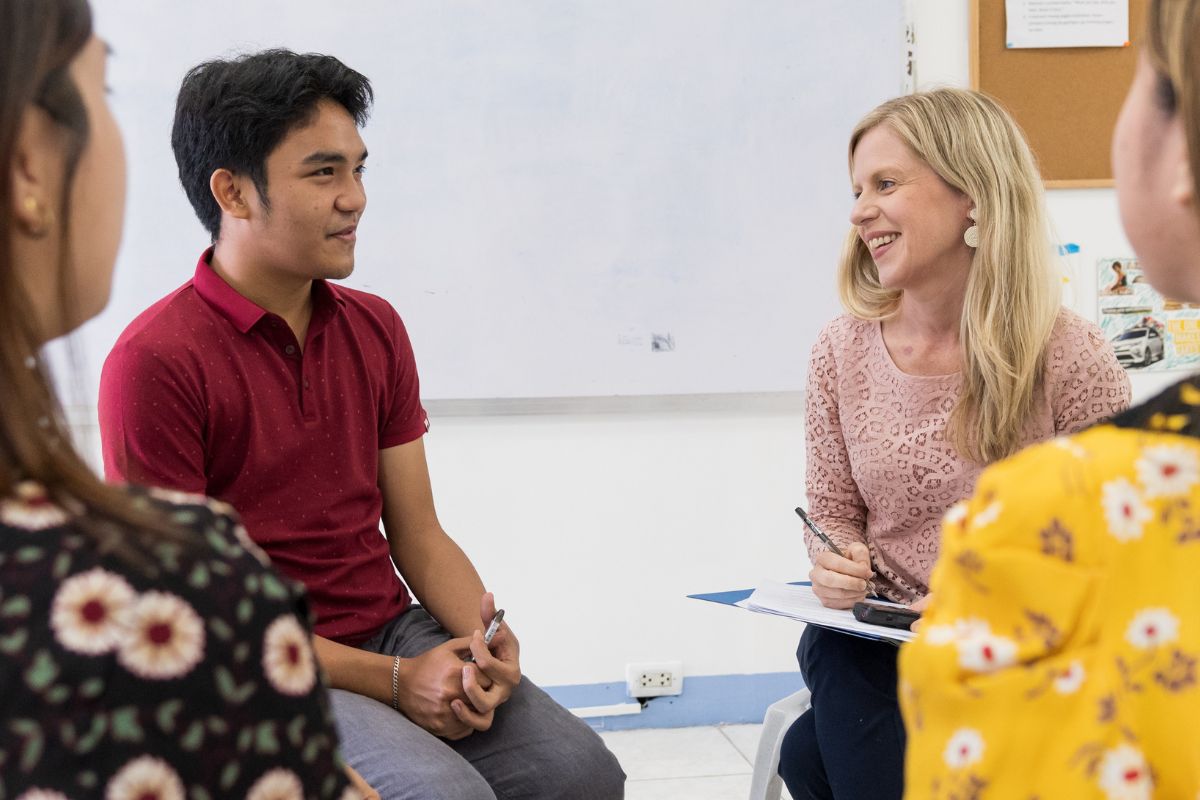
Our upcoming study strives to understand GBV survivors’ experiences in seeking support from Eleison and other service providers when in crisis and their recommendations for strengthening crisis intervention services. The study will employ qualitative research methods, including in-depth interviews and focus group discussions (FGDs), to gather data revealing survivors’ perspectives on crisis response services for suicidal ideation and behavior and interpersonal violence. Through the knowledge gained from this study, we hope to develop an integrated safety planning intervention for survivors experiencing both GBV and suicidality simultaneously. By consolidating the safety plan, survivors can more effectively navigate their path to recovery and security in a single, accessible, and comprehensive resource.
While the vision for our research initiative is clear, we still need to raise more funds to make it a reality. We invite you to support our fundraising efforts to ensure that our research has the resources it needs to achieve its goals. Your contribution, whether large or small, can make a significant difference in the lives of survivors. Donate here today!