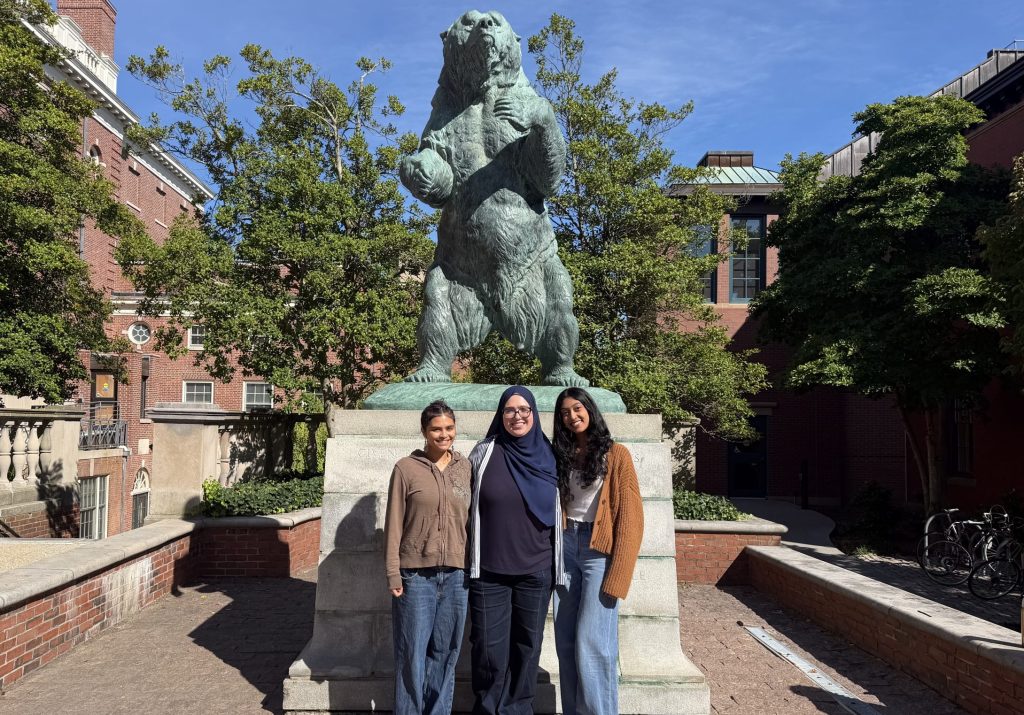

Dedicated to fostering future leaders, Eleison is pleased to host interns from Brown University’s Careers in the Common Good (CCG) Winternship program. The CCG Winternship program offers undergraduate students the chance to contribute to meaningful projects with social impact organizations and companies every winter break. Despite the brief duration of two weeks, these projects provide students with hands-on experience, allowing them to actively participate and develop tangible professional skills.
Anti-trafficking organizations operate on the front lines of a global crisis, often finding themselves in a precarious financial position, relying heavily on grants, donations, and partnerships to sustain their operations. Throughout their internship at Eleison, Indira Abzalova and Siddharth Singh focused on grant research, highlighting the constant struggle of anti-trafficking organizations to secure consistent and reliable funding:
“Throughout my research, I discovered the challenges faced by local anti-trafficking organizations in securing funding, where many opportunities are highly competitive or predominantly cater to well-established non-profits. In my opinion, local initiatives often require funding and support the most. I’ve also gained a heightened awareness of how global inequalities or foreign policy priorities of powerful donor countries shape requirements for obtaining funding. This, in turn, significantly affects the opportunities for anti-trafficking non-profits in the Global South.” – Indira
“I have never been exposed to the challenges that nonprofits face when seeking funding. The majority of my experience at Eleison has involved participating in grant research, enabling Eleison to fund evidence-based and survivor-focused programs supporting victims of human trafficking and gender-based violence. Entering this internship, I assumed that, given the importance of the issues organizations like Eleison address and their wide-reaching impact, funding would be readily available. I was wrong. I now understand that acquiring grants is very challenging due to specific eligibility requirements, lengthy application processes, and the limited availability of these programs. I also grasp that nonprofits in this sector must make the most of what they have to fulfill their missions.” – Siddharth
The fight against human trafficking is a daunting task that demands relentless effort, dedication, and resources. As Indira and Siddharth wrap up their internship, they shared their suggestions for institutions interested in funding anti-human trafficking work or small community-based nonprofits:
“I believe that one of the crucial areas for improvement is transparency. When donor institutions clearly outline all the steps and requirements of a grant or other funding programs, it becomes easier to find and apply for them, especially for small non-profits that may lack extensive resources for fundraising. Additionally, prioritizing local organizations that directly engage with the community would be beneficial. This approach would enable them to avoid constant competition with well-established, larger non-profits.” – Indira
“Through my research on institutions that fund organizations like Eleison, which assist survivors of human trafficking and gender-based violence, I discovered that most institutions adopt a direct approach to these issues rather than focusing on building up organizations that support the victims. To combat this notion, one suggestion I would give to these institutions is to focus on capacity building for organizations. This entails providing funding for foundations to create solutions through training, research, and awareness campaigns in areas where human trafficking and gender-based violence are prevalent. Another suggestion for these institutions is to maintain transparency regarding the types of funding available, eligibility criteria for organizations, and alternatives for those with similar values that may not meet the specified criteria. Lastly, I propose that institutions recognize the global nature of these issues, acknowledging that they are not confined to localized settings. In other words, providing funding for organizations that address anti-human trafficking and gender-based violence on a broader scale, rather than limiting support to specific geographic areas.” – Siddharth
As Eleison continues to host interns through programs like the CCG Winternship, we remain committed to not only providing hands-on experience but also nurturing a sense of social responsibility among young leaders. The hope is that these emerging professionals will carry the torch forward, advocating for sustainable solutions and innovative approaches to address human trafficking. As the interns return to their academic pursuits, they carry with them a deeper understanding of the complexities involved, poised to become advocates for change in their respective fields.